Read what the yard already does
A small garden often carries more daily work than its photograph suggests. It may be the route to a shed, a place to dry washing, somewhere to park a bicycle and the only outdoor eating space. Before choosing a new layout, list those uses and identify which ones happen together. A table that blocks access whenever someone sits down is not a successful improvement, however neatly it fills the image.
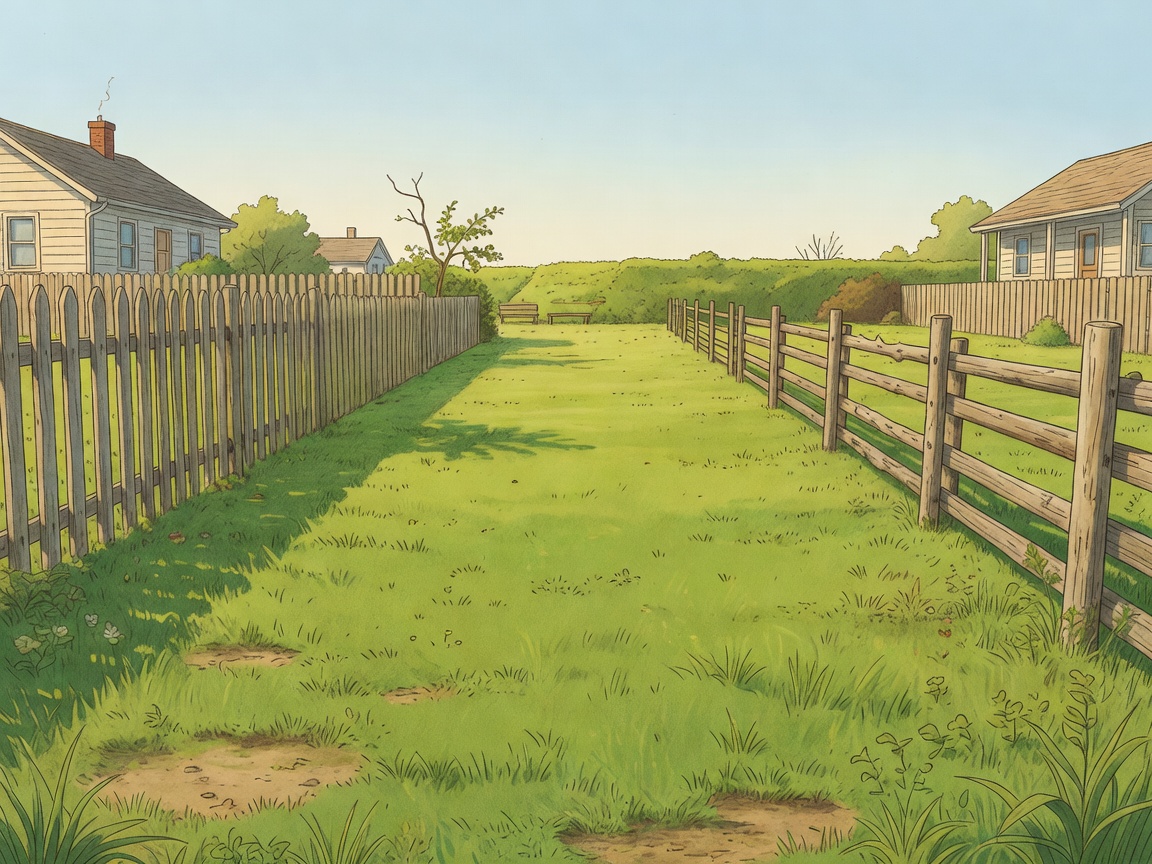
Photograph the existing yard from the main doorway and from the far end. Include the door swing, steps, drain covers and storage. Then make a simple measured sketch. The sketch checks proportions that a wide-angle lens can exaggerate. Mark anything you cannot casually move, including inspection covers and established trees. Check ownership and local restrictions before assuming a boundary or tree can be altered.
Give the route a clear job
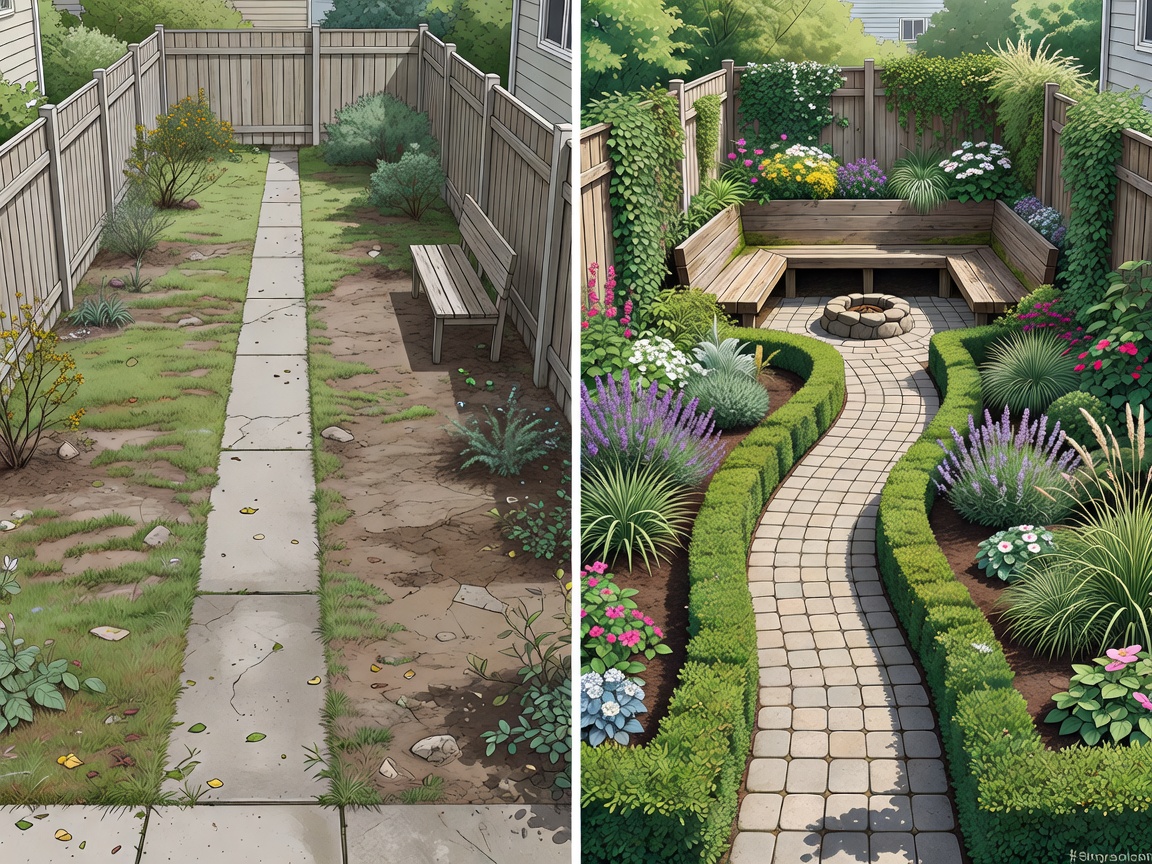
In our illustrative comparison, the important change is separation: circulation no longer cuts through the centre of the seating area. That does not mean every small yard needs a straight path. It means the main route should be legible and usable when the garden is occupied. Test its width in the actual space with temporary markers and the objects you carry through it.
Place your existing furniture inside the proposed seating outline. Pull out the chairs, open the barbecue lid if relevant and leave room to pass. Consider a visitor using a walking aid or pushing a buggy. A plan can be compact without being cramped, but accessibility needs vary and should be discussed with the people who will use the garden. Do not infer comfortable clearances from a photograph alone.
Use boundaries to make room
Deep planting along one well-chosen edge can be more useful than a thin border around every side. It creates enough root space for an intentional plant community and can give a seat a sense of shelter. Keep an eye on mature spread: a young shrub in a narrow bed may later occupy the path. Climbers can add vertical growth, but the support, pruning access and suitability of the wall all need consideration.
Borrow principles from gardens rather than their scale. The garden rooms at Hidcote and Sissinghurst Castle Garden offer lessons in enclosure and changing views, not a template to squeeze into a courtyard. The planting at Great Dixter demonstrates layered seasonal interest, but its maintenance and growing conditions are part of that result. None of these places is affiliated with this website.
Retain something that already works
Transformation pictures encourage the impression that improvement begins with clearance. Sometimes keeping a sound path, a useful tree or a serviceable seat is the better decision. Retained elements reduce the scope of work and preserve familiarity. They can also give new planting a visual anchor. Record what stays in the caption, rather than allowing the “after” to imply that every visible part is new.
Work in stages when uncertainty is high. Move a freestanding seat before constructing a fixed bench. Try a temporary container where a planting bed might go. Observe where rainwater collects before changing levels. A reversible test will not answer every question, but it can expose a layout mistake before construction makes it expensive to correct.
Compare an ordinary day, too
The most useful follow-up photograph might show the yard in use rather than perfectly arranged. Include the hose, the opened storage door or the chairs in their normal position. Take another frame in the less flattering season. That view reveals whether the layout still has structure when summer foliage is absent and whether winter access remains practical.
Describe the limits of the comparison. If a plant-filled summer view is set against a bare winter starting point, say so. If furniture has been removed to take the picture, record that as well. A successful small-yard idea should survive a plain account of the circumstances. Your goal is not to make the space look endlessly larger; it is to make its actual size work better.
Before borrowing this idea
Check the measured route, mature plant spread, storage access and the view from indoors. Those four checks are more informative than a dramatic change in colour.
Make your own comparable record