Start with what the ground must do
A lawn-to-patio comparison can make paving look like an automatic upgrade. In reality, grass and hard surfaces serve different purposes. A lawn can provide flexible play space and a relatively soft foreground. A patio can make furniture easier to use and create a firm route close to the house. The right balance depends on household routines, soil, climate, access and the amount of maintenance you can sustain.
Write down the problem before choosing a material. Is the table unstable, the route muddy, the lawn difficult to mow or the seating too far from the kitchen? These are different design questions. A modest extension to an existing terrace may solve one of them without replacing the whole lawn. Improving an awkward mowing edge may be more appropriate than removing otherwise useful grass.
Compare shape before finish
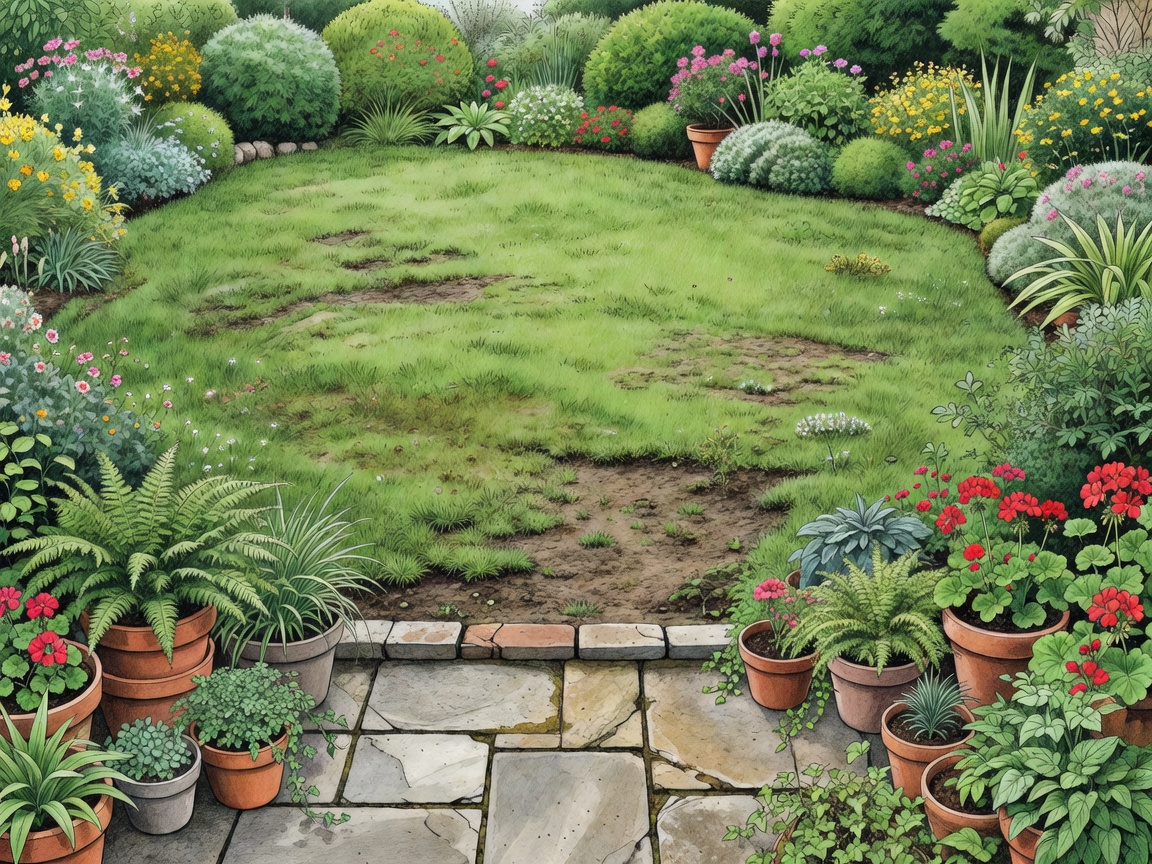
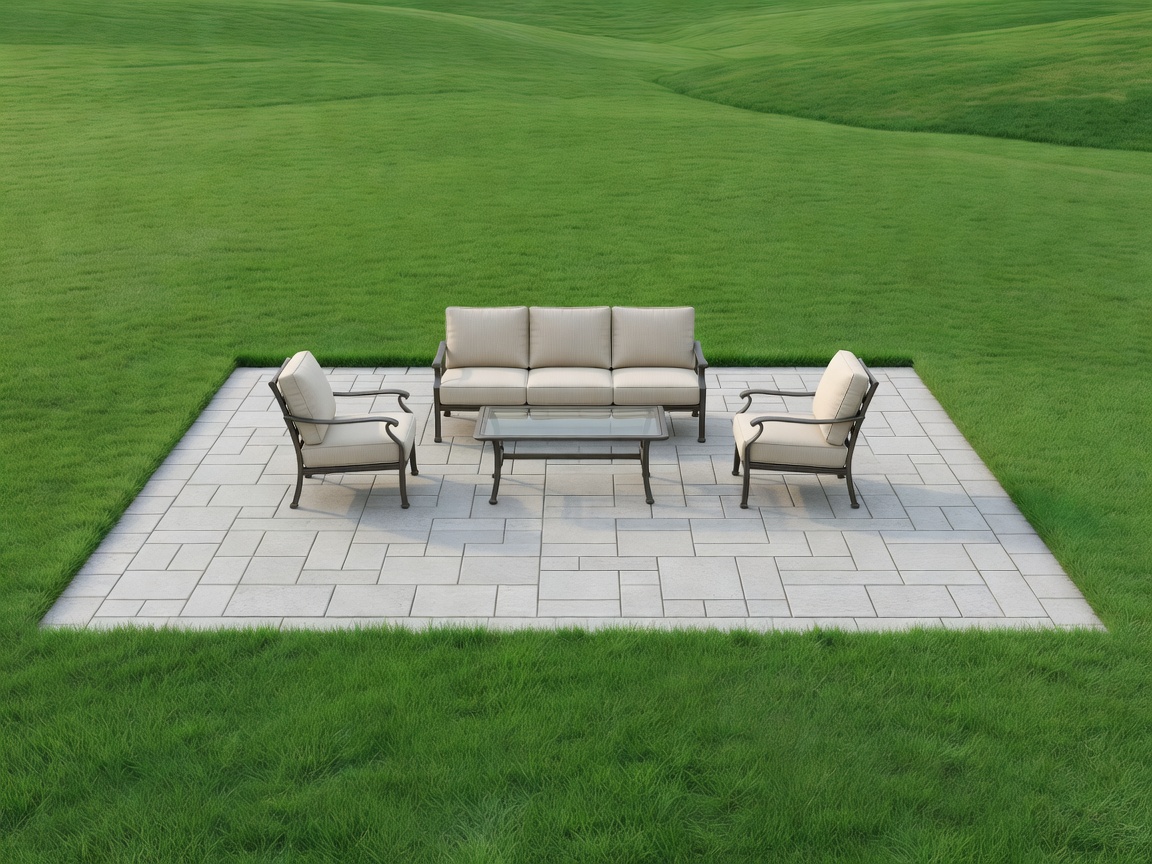
In our illustrative pair, the revised patio has a more usable seating outline and a clearer relationship with the lawn. That is a layout principle, not evidence that a particular paving product is superior. Test the outline on site with a hose or temporary markers. Put the table and chairs inside it, leaving them in the positions people actually use rather than pushing them tightly together for a photograph.
Look at the transition from the house and the destination beyond the patio. A narrow bottleneck at either end can undermine an otherwise generous area. Consider bins, garden equipment and access for repairs. Do not let decorative geometry cover inspection points or create inconvenient strips of grass that are difficult to maintain. Retaining simple access can matter more than a visually perfect pattern.
Ask where the water goes
A finished photograph cannot establish whether falls, drainage connections or the underlying construction are suitable. Water behaviour depends on more than the visible surface. Soil infiltration, ground levels, foundations, nearby structures and local rules all affect the solution. A permeable-looking finish does not prove that the complete construction will handle rainfall as intended.
Observe the existing garden during wet weather and record standing water, runoff routes and damp areas. Do not raise levels against buildings or direct water towards neighbouring property on the strength of an inspiration image. Ask a suitably qualified local professional to assess levels and drainage where needed. Before excavation, arrange the appropriate utility checks for your location and confirm relevant permissions.
Keep the hidden work in the record
If you are documenting construction, photograph the exposed ground, preparation and intermediate layers as well as the final finish. Include a scale reference where safe and keep supplier documents, specifications and any professional advice separately. Images may help explain what happened, but they do not certify compaction, loading capacity or compliance. Never enter an unsafe work area just to improve a sequence.
A useful project caption distinguishes visible work from reported information. “New paving visible” is something a reader can inspect. “Drainage problem resolved” needs evidence beyond a dry-day photograph. Describe observed conditions and the period of observation instead of presenting a polished surface as proof of long-term performance. Keep maintenance and defects in later follow-up records, not only the attractive handover view.
Choose materials in context
Colour in a photograph is affected by wetness, shade and editing. See physical samples in the actual garden and consider how the surface behaves when wet, how it will be cleaned and whether repairs are practical. The pale gravel at Beth Chatto's Gravel Garden belongs to a specific planting and site context; it is not a universal prescription for a shaded family patio. Borrow the relationship between surface and planting, not a promise of identical results.
Likewise, the path and ground treatments at the Portland Japanese Garden demonstrate careful sequencing and detail within a particular landscape. They are useful references for observation, not construction specifications. Neither garden is connected with this website. For your own project, retain sound materials where feasible, account for removal and delivery access, and get written local advice where construction risks require it.
An honest “after” caption
State the visible change, the photograph date, the conditions and any unverified claims. If costs, below-ground work or elapsed time are unknown, say so directly.
Document more than the finished surface